National Grower Group Extension Plan & Capacity Building
About the Project
Building grower group capacity by developing and implementing a national strategic approach to more effectively deliver extension that drives the adoption of innovation and sustainable farm practices in broadacre agriculture.
This project takes a bottom-up approach, enabling engagement by delivering via established networks and allowing activities to be targeted to regional needs.
Support will be provided for those who are already engaged in ‘helping themselves’ to improve the adoption of new technology and extension services in their community and their farm businesses.
-
Funder: Australian Government’s National Landcare Program
-
Date: January 2019 - June 2023
-
Project Lead: Mark Stanley
-
Budget: $270,000
-
Project Team
Annabelle Bushell, WA Grower Group Alliance; Chris Souness, Birchip Cropping Group; Di Parsons, Central West Farming Systems; Jon Midwood, Southern Farming Systems; Cindy Cassidy, Farmlink; Ruth Nettle, University of Melbourne; Jeanette Long, Ag Consulting Co
Further Information
Grower groups and their support structures face many future challenges. There is a critical need for greater capacity across the industry to support these structures. There is an emerging new generation of industry personnel who require mentoring and training to fill the needs of the industry. Some of the specific challenges include:
- leadership and capacity challenges for the future viability of groups;
- accessing skilled personnel to provide effective leadership, management and technical skills for the operations of the groups;
- managing erratic funding cycles and incomes to keep the momentum of the groups going;
- ability to work across regions and collaborate with other groups in a coordinated fashion to build cost-efficient initiatives that address similar issues and to share resources;
- developing and maintaining adequate governance in the group structure to minimise organisational risk.
- Embedding processes based on robust social science concepts and frameworks into extension projects
Grower groups across the nation play a critical role in the development of sustainable and profitable broadacre farm practices through their strong relationships with RDC’s, research providers, State and Commonwealth government agencies, NRM regional organisations and industry.
These groups have several common features that aid them in collaborating to improve their collective effectiveness. These features include being farmer-owned and driven; driving local innovation through the validation of research findings and extending these findings to their farmer members and non-members; and are employers of local expertise to manage and operate the groups and conduct locally relevant research and extension.
Across Western Australia, South Australia and the eastern states there are now over 80 farm systems groups. The WA Grower Group Alliance, the South Australian based Ag Excellence Alliance and several of the large grower groups in the East have made significant strides in developing a national representative approach to the issues and opportunities with the grower group network.
Grower groups are a significant force across Australia. In South Australia alone 17 organisations have direct reach to around 75% of broadacre farmers in the state. In Western Australia, 45 groups are reaching approximately 4000+ individuals from farming businesses. A recent study in this State found that for every dollar invested in grower groups there was a $10 return to the economy (in prep, AgKnowledge, 2017).
Grower groups are ‘innovation brokers’, bringing farm advisors, researchers, regional NRM organisations, resellers and farmers together. They provide much of the local/on-ground information and support “soft- infrastructure” that farmers seek, and this helps industry and government achieve their goals (Ruth Nettle, 2017).
In agriculture, technology meets adoption largely through the communication and extension efforts of grower groups and their networks. We could naively think that one-size-fits-all in terms of extending results to growers, however, we need different strategies for different situations - one-size definitely doesn’t fit all. The extension needs to be an equal partner in Research, Development and Extension complex. Into the future communication & extension needs to be given the recognition and respect it deserves. Extension strategies need to be well thought through and context-driven to achieve the outcomes they are targeted to achieve. The industry needs to build capacity in grower groups and their networks toward effective and successful delivery mechanisms.
Grower groups are the key drivers of strategic change in the broadacre farming sector. These groups have the trust of government and industry funding bodies to be the key recipients of funds to drive regional research, development and extension of agricultural innovation and sustainable practices at the local, regional and state level.
Groups have built a reputation and established themselves based on their outputs, services and relevance to their members and communities, and believe strongly in maintaining these by delivering outcomes. They look to partner and collaborate with appropriate organisations and stakeholders, but not at the expense of their members, their priorities and their reputation, and with the continuing motivation of finding solutions.
Grower groups are a vital resource in the NRM and primary industry sectors, having built a reputation and established themselves based on their outputs, services and relevance to their members and communities, and believe strongly in maintaining these by delivering outcomes. The number and spread of groups have increased significantly in the past twenty years.
A more effectively coordinated, networked and skilled broadacre national grower group collective, well-placed to deliver high impact national investment of RD&E driving on-farm innovation and adoption of sustainable practices by:
- Developing and implementing a national extension strategy for broadacre / mixed farming agriculture
- Developing and delivering a national capacity building program to increase the long-term sustainability and effectiveness of grower groups to deliver innovation to the farming sector
the project will develop a strategy to address the key issues affecting the long term capacity of the national grower collective to drive the adoption of innovation and sustainable farm practices:
- Assess the skills required to provide effective leadership, management and technical skills for the operations of grower groups;
- Develop strategies for imbedding processes based on robust social science concepts and frameworks into extension projects
As a collective, farmer-driven grower groups need to demonstrate their value to a range of stakeholders if they are to continue to be effective in the future. There are a range of issues and opportunities that grower groups could address at the national level that will increase their level of professionalism, including;
- pathways for careers in agriculture – there are limited opportunities to meet extension training needs;
- succession planning for groups;
- a universal mapping program available across organisations that provide; consistency in use and interpretation;
- research exchange program for university graduates.
The strategy will address:
- The challenges faced by the groups in terms of extension of R & D
- Agreement of the professional development program that will drive capacity building in the network.
The outputs will be:
- A national extension strategy documented with key actions and timelines for implementation that has ownership by all groups in the National grower group collective.
- An over-arching agreement signed off by the grower groups as to how they will work collaboratively together to build capacity to deliver RD&E.
Informed from the development of the national extension strategy, deliver a range of training programs that will meet the needs to increase the long-term sustainability and effectiveness of grower groups to deliver innovation to the farming sector.
The national collaboration in skills development will focus on a range of skills that have been identified both regionally and at the national level ;
- multi-channelled communications including targeted writing styles;
- extension planning and delivery;
- project design and management;
- monitoring and evaluation;
- facilitation and mentoring skills;
- experimental trial design and analysis, clearly articulate the distinction between research, validation and demonstration trial and their related trial methods, analysis and evaluation;
- embedding processes based on robust social science concepts and frameworks into extension projects including understanding personality types and learning styles.
The initial training will provide core skills in extension that will be applied over the course of the project. Also, there will be focused training offered to cater for the differing needs of grower groups and their delivery partners. There will be a mix of nationally and regionally based training.
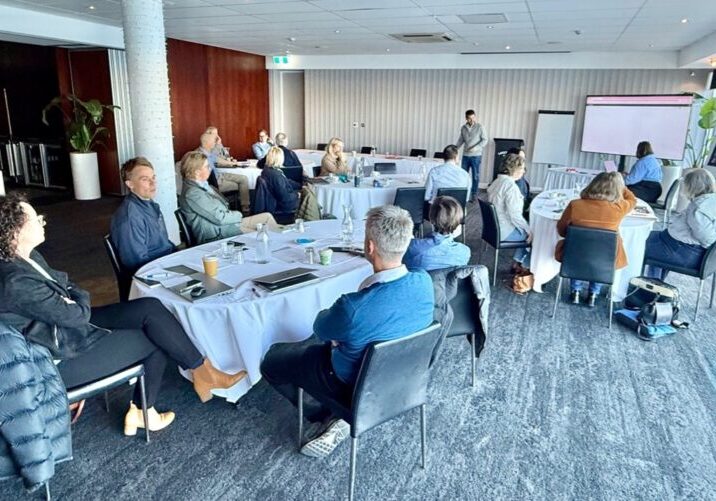
The program delivering core skills in extension will be based on the highly successful model piloted in an NLP Small Grant project, “SGR1-0500 Increasing the Effectiveness of Extending Sustainable Agriculture Research by Farming Systems Groups”. The project delivered an initial two-day workshop where participants learnt about extension theory and practice and then applied these learnings to their own extension program to be delivered over the course of the project with online and mentoring support. To conclude the project another one-day workshop took place where each participant shared and reviewed the outcomes of their project.
Developing and delivering effective extension is based on a sound understanding of the underlying principles and knowledge of the audience being targeted. This project will work with project managers and deliverers who work for and with grower groups from across Western and south-eastern Australia. There are over 80 grower groups that will benefit from this project. The average farmer membership exceeds 100 per group. These groups are supported by a range of industry experts who provide project delivery services who will also benefit from this project.
For those wanting to further develop their skills, more focused training will be offered as the project progresses. This advanced training will be offered on a regional basis or a national basis based on special interest groups that have common requirements. Specialist trainers who have extensive industry experience will be engaged to deliver this training. The training will be further supported through working with the University of Melbourne who offers extension training packages that were developed as part of the Rural R&D for Profit project on “Stimulating private sector extension in Australian agriculture to increase returns from R&D (ref: University of Melbourne Rural Innovation Research Group June 2018)”. These can be accessed as a standalone package tailored for the proposal where people can choose the modules they are most interested in and either they can complete with others at set dates and/or we collaborate with you both to facilitate the face to face or online peer to peer learning in a program over 6 months or a year.
PROJECT LEGACY - Building a lasting National Grower Group Network

This investment will bring to fruition a national grower group network for broadacre agriculture that will have ongoing trust and capability to deliver sustainable agriculture outcomes more effectively for rural communities, developing resilient farming systems that are more equipped to deal with the vagaries of climate and consumer demands, resulting in a more a productive and profitable agriculture industry.
The project will provide the capacity building that is necessary to ensure future investments in RD&E are delivered more effectively.
A properly skilled and linked national grower group network will have the capability to develop and deliver more effectively in a collaborative manner, leading to the faster adoption of sustainable agricultural practices.
The project will lead to the development of stronger community leadership, including effective engagement with young people involved in the industry.