Innovative Soil Technologies to Foster Resilience and Climate Smart Crop Production in Australia Project
Climate variability is significantly challenging dryland farming systems across Australia. Led by Adelaide University, the Climate Smart Soils project is addressing this challenge by trialling Innovative Soil Technologies (IST) that dramatically improve water infiltration and retention- the critical factors that determine crop success in a drying climate.
Working with nine regional grower groups across five states, our research evaluates soil treatment approaches across diverse soil types, delivering evidence-based insights that Australian farmers can act on today.
The challenge
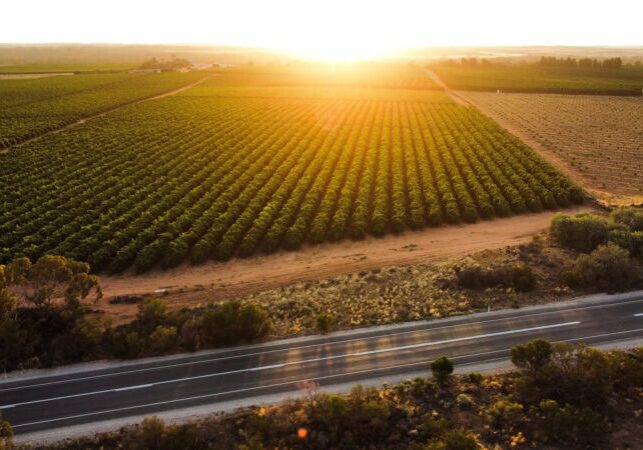
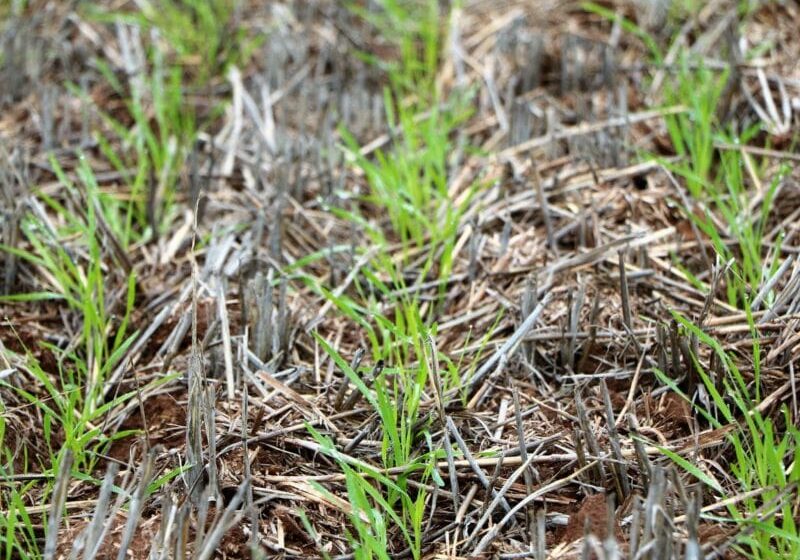
Dryland farming across Australia faces increasing climate variability — reduced and erratic rainfall, intensifying heat events, and accelerating soil degradation. These pressures threaten food security and farm viability, demanding new approaches to soil and water management.
- Reduced and unpredictable rainfall patterns
- Declining soil water infiltration capacity
- Increasing frequency of extreme weather events
- Long-term soil health deterioration
Our approach
Innovative Soil Technologies (IST) offer a practical, evidence-based pathway to improved soil water efficiency. We’re rigorously testing these technologies in real farming conditions — not laboratory settings — to deliver actionable insights for growers.
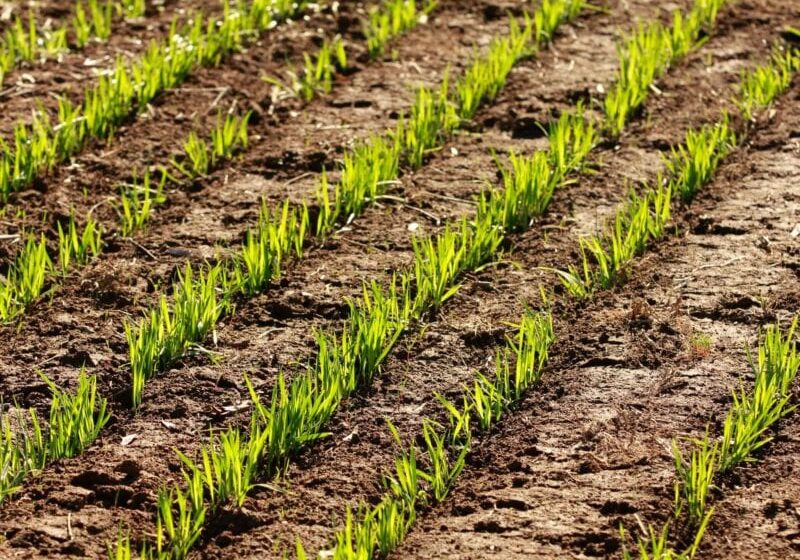
- Improved water infiltration and retention
- Reduced runoff and evaporation losses
- Evidence across diverse soil types and states
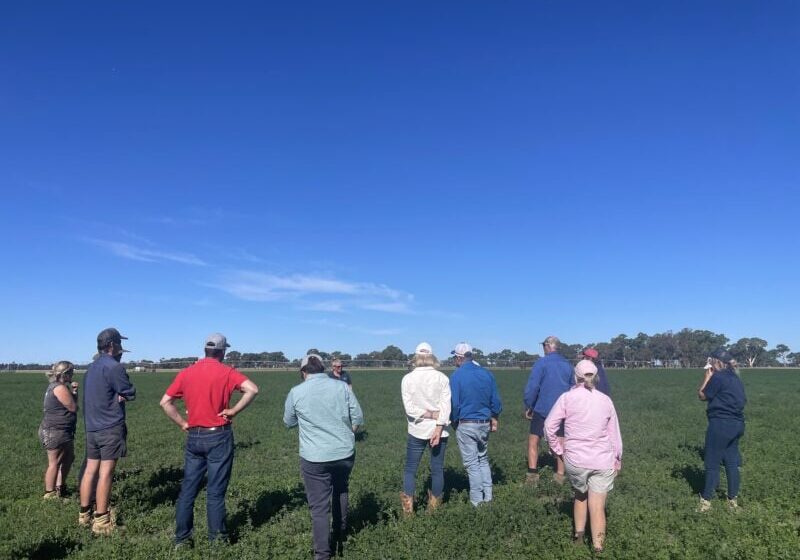
- Farmer-led trials in real growing conditions
The trials
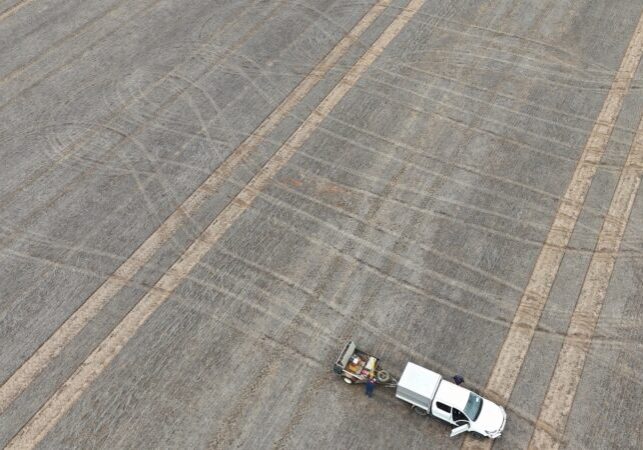
Ten trial sites have been established across South Australia, Western Australia, Victoria and New South Wales to test the effects of novel lime and gypsum application methods on soil amelioration and water use efficiency. Micronised lime and gypsum products will be compared with conventionally available local sources to assess the speed at which they are effective and how far they move through the soil profile. Products will be applied both to the surface and incorporated at depth.
Ag Excellence Alliance will work alongside University of Adelaide to support communication and extension activities for the project.
Further information
You can visit the project website here.
Or follow the project on Facebook, Instagram, and LinkedIn.
‘The Innovative Soil Technologies to Foster Resilience and Climate Smart Crop Production in Australia Project’, is supported by the Australian Government through funding from the Climate-Smart Agriculture Program under the Natural Heritage Trust.
-
Funded by the NHT Climate Smart Agriculture Program – Partnerships and Innovation grants
-
September 2024 to April 2028
-
Ag Ex Project Lead: Rachel May